Where Sheet Metal Makes Sense
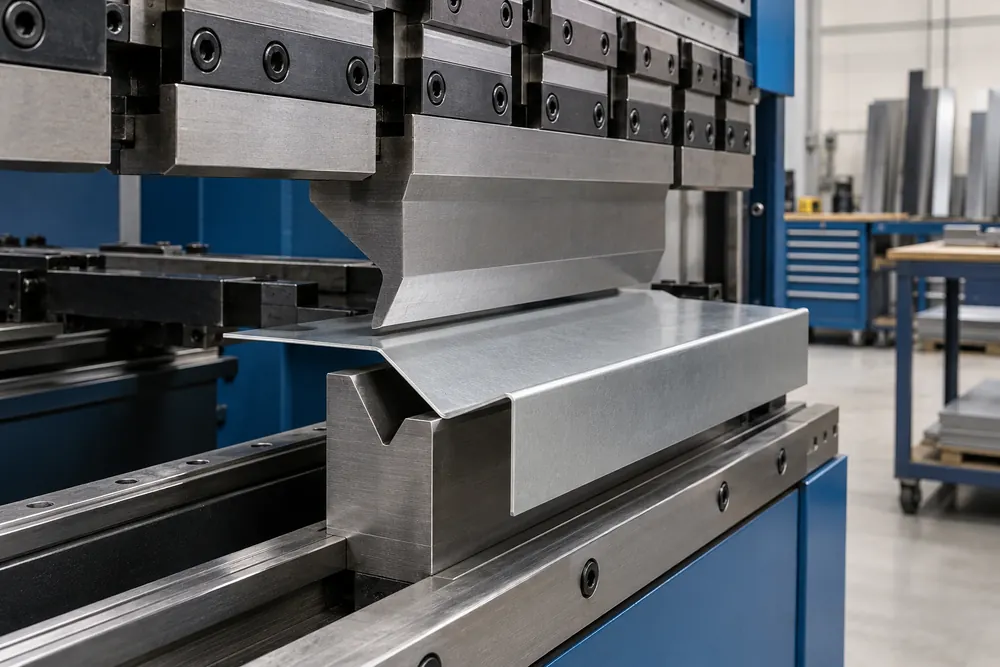
Sheet metal fabrication creates components by cutting flat material, forming bends and joining or fixing the resulting shapes. It suits folded covers, liners, panels, brackets and equipment enclosures where the geometry can be developed from sheet. A folded return can add stiffness without simply increasing the material thickness.
Our enquiries cover industrial facilities, fit-out contractors, maintenance teams and commercial equipment projects. Explain whether a panel is cosmetic, protective, loadbearing or part of a machine enclosure. Different functions demand different design checks, and a neat fold is not a substitute for a safe product specification.
Designing A Part That Can Be Folded
Provide a dimensioned drawing showing the finished shape, material grade and thickness. Identify internal or external dimensions, hole centres, bend directions and the surfaces that will be visible. A flat pattern should account for the bend allowance used by the manufacturing process rather than treating the metal as having no thickness.
Holes placed close to a bend can distort during forming. Small returns, deep boxes and closely spaced bends may restrict tooling access or change the order of operations. Resolve these details with the fabricator before finalising the design, especially where a cover must align with an existing machine or frame.
Materials, Edges And Finish
Mild steel sheet generally needs a finish suited to its environment. Stainless steel may be chosen for cleaning or corrosion resistance, with the grade and surface finish agreed for the application. Aluminium can reduce weight, but material condition, bend behaviour and fixings need to suit the component.
Specify safe edge treatment and any visible grain direction. Protect decorative faces during manufacture, transport and installation, then remove temporary films at the appropriate stage. Where a panel is painted or powder coated, include masking requirements and allow for coating thickness at mating surfaces.
Safety And Applicable Requirements
Press brakes, cutting equipment and other workshop machinery fall within work equipment safety duties under the Provision and Use of Work Equipment Regulations 1998. The HSE PUWER guidance is a useful starting point for equipment selection, guarding, inspection and competent use. These are process duties rather than a product certification for every folded panel.
If sheet metal is used as a machinery guard, the final arrangement needs an assessment of openings, reach distances, removal for maintenance and any interlocking. The machine owner and responsible designer must consider the completed assembly. A ventilation slot or removable cover can change access to hazardous parts.
Welded sheet also requires fume controls appropriate to the material and process. Discuss the intended application where the component has structural, fire, hygiene or electrical duties, since ordinary fabrication dimensions alone do not establish compliance with those requirements.
A Sheet Metal Job Step By Step
First, send drawings and the intended quantity, including prototype and repeat-order needs. Identify features that must match existing parts, and say whether you have a physical sample. Check that the drawing revision is the one authorised for manufacture.
Next, the cutting and folding route is reviewed for tooling access and repeatability. A trial component can be useful where the design is new or the assembly fit is sensitive. Approve any changes to returns, hole positions or joining details before the batch proceeds.
After forming, components are deburred, joined where specified and checked at the important dimensions. Finishing and packing should preserve the intended surface quality. Installation responsibility, fixings and any adjustments at the receiving site should be agreed as part of the order.
Cost And Quotation Information
Material type, sheet thickness, nesting efficiency, number of bends and assembly work affect sheet metal cost. Small production runs still carry drawing and machine set-up time. Complex folds or cosmetic surfaces may need extra handling and inspection even when the finished part is light.
Send the quantity, finish, delivery postcode and required date with your enquiry. Mark essential tolerances and avoid applying unnecessarily tight limits across an entire drawing. For thicker welded assemblies, see commercial metal fabrication, or ask us to review your sheet metal requirement.
Sheet Metal Fabrication Questions
Can You Make A Prototype Before A Batch?
A sheet metal prototype can be included in the scope where fit or folding details need confirmation before a batch. Agree what the prototype will prove, which dimensions will be checked and how approval will be recorded. Later design changes may require a revised sample, new tooling arrangements or a fresh quotation.
What Files Help With A Sheet Metal Quote?
A sheet metal quotation benefits from a dimensioned PDF and, where available, suitable CAD data for the part. Include material, thickness, quantity, finish and the current drawing revision. State which dimensions control assembly fit, and explain any cosmetic surface requirements so that forming, handling and inspection can be planned around them.